
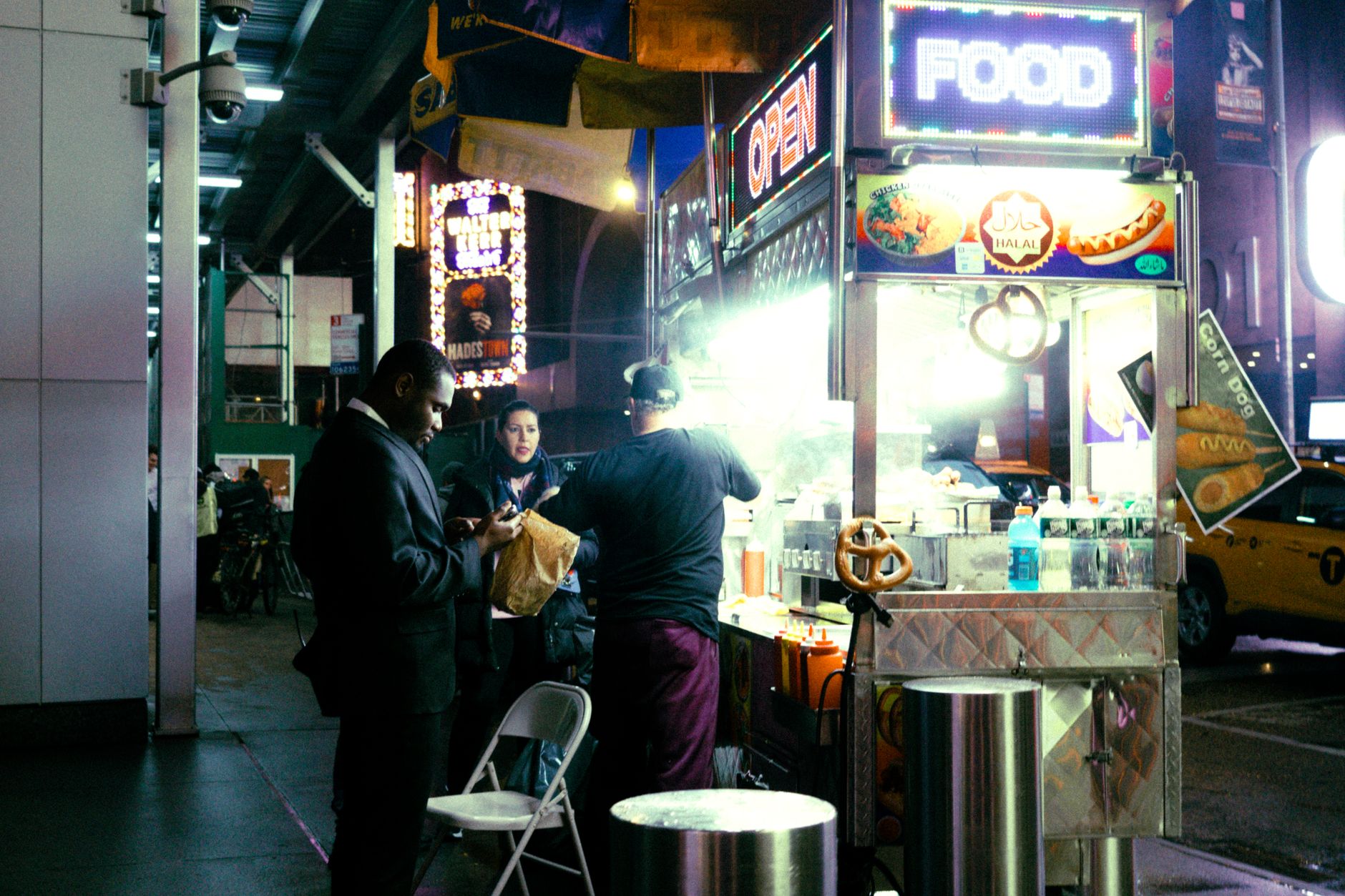
The Booming $226 Billion US Halal Food Economy: Trends to Watch in 2026
The US Halal Food Market Is Booming — And Smart Businesses Are Taking Notice
What was once considered a niche dietary category has become one of the most compelling growth stories in the American food industry. The us halal food market is expanding at a pace that is turning heads in boardrooms, investment firms, and restaurant groups across the country. Driven by a growing Muslim-American population, increased consumer awareness, and a broader cultural appetite for ethically sourced, clean-label foods, halal is no longer operating at the margins — it is moving to the center of the plate.
The numbers speak for themselves. According to research cited by Malou, the North American halal food market is projected to double from approximately $113 billion to $226 billion by 2033. Globally, Fortune Business Insights forecasts the halal food market will reach $1.25 trillion by 2034. These are not speculative figures — they reflect sustained demographic momentum, shifting consumer values, and significant unmet demand in both retail and foodservice channels.
A Market Built on Demographics and Demand
The Muslim-American population currently numbers between 3.5 and 4.5 million, with broader estimates suggesting the community will continue growing through both immigration and natural increase. Muslims in the United States skew younger and more urban than the general population, representing a consumer segment with strong purchasing power and brand loyalty when businesses earn their trust. This demographic reality alone makes the us halal food market a strategic priority for any serious food entrepreneur or restaurant group.
Beyond Muslim consumers, halal food is attracting interest from a wider audience. Many non-Muslim consumers perceive halal certification as a marker of quality, humane animal handling, and rigorous food safety standards. This crossover appeal is a meaningful tailwind for producers and restaurateurs looking to justify the cost of halal certification and supply chain transitions.
The Rise of the Halal Pantry: Niche Staples Go Mainstream
One of the most exciting developments within the us halal food market is the emergence of premium, specialty halal pantry staples. For years, Muslim-American consumers faced a significant gap between their dietary requirements and the artisan, health-forward food products filling the shelves of upscale grocery stores. That gap is closing rapidly, and innovative brands are leading the charge.
Products like halal-certified bone broth, grass-fed beef tallow, and artisan-crafted jerky — offered by specialty retailers such as Boxed Halal — represent a new generation of halal consumer goods. These are not basic commodity products. They are premium, clean-ingredient staples that speak directly to health-conscious Muslim consumers who have been underserved by both conventional health food brands and traditional halal suppliers. The sophistication of this product category signals a market that has matured well beyond halal hot dogs and deli meats.
Beef tallow, in particular, has benefited from the renewed mainstream interest in animal fats and ancestral eating patterns. Halal-certified versions allow Muslim consumers to participate in this culinary trend without compromise. Similarly, halal bone broth taps into the wellness economy in a way that has gone largely unaddressed by major health food brands. These niche staples are not just filling gaps — they are building entirely new product categories within the us halal food market.
Restaurant Groups Are Paying Attention
The foodservice sector is where much of the most visible transformation is taking place. Large restaurant groups and quick-service chains across the United Kingdom, Canada, and Europe have long operated halal-certified locations. The United States is now following suit, driven by competitive pressure, franchise expansion into Muslim-majority neighborhoods, and a growing understanding that halal menus are good for business.
Several regional and national chains have begun piloting halal menus in markets with significant Muslim populations, including cities like Detroit, Chicago, Houston, and New York. The economics are compelling: halal consumers are notably loyal to establishments that accommodate their dietary needs, and word-of-mouth within Muslim communities can dramatically reduce customer acquisition costs for early movers. For restaurant groups evaluating growth strategies, the us halal food market offers a rare combination of high demand, brand loyalty, and limited existing competition at the premium end.
Ghost kitchens and delivery-first concepts have also proven to be effective vehicles for halal expansion, allowing operators to test the market with lower capital requirements before committing to full brick-and-mortar transitions. This has opened doors for independent Muslim-American restaurateurs and food entrepreneurs who may lack the funding for traditional restaurant buildouts but possess deep knowledge of the cuisine and the consumer.
The Infrastructure Gap — and How Entrepreneurs Are Closing It
Despite its growth trajectory, the us halal food market still faces meaningful structural challenges. Halal certification remains inconsistent, with multiple certifying bodies operating under different standards and limited consumer education around what certification actually means. Supply chain infrastructure, particularly at the regional level, can be fragmented, making it difficult for small producers to scale efficiently.
Muslim food entrepreneurs who are innovating in this space — whether developing premium pantry products, launching halal meal kits, building cloud kitchens, or bringing new cuisines to American audiences — deserve greater visibility and community support. That is precisely the kind of platform that Rizqly.com was built to provide. As a directory specifically designed to connect Muslim-owned businesses with consumers and collaborators, Rizqly.com serves as a discovery engine for the next generation of halal food brands. If you are building a food business in this space, listing on Rizqly.com is one of the most direct ways to get in front of an engaged, values-aligned audience that is actively looking for what you offer.
Capitalizing on the Moment: What Operators Need to Know
For food brands and restaurant operators considering entry or expansion in the halal category, timing matters. The market is growing rapidly, but competitive differentiation is still achievable. Brands that invest now in genuine halal certification, authentic sourcing, and transparent communication will be positioned to capture outsized loyalty as the market scales.
Packaging and branding strategy also deserve serious attention. Muslim-American consumers are sophisticated buyers who respond to brands that reflect their values without tokenizing their identity. The most successful halal food brands in the coming decade will likely be those that lead with quality and craftsmanship first, with halal certification serving as a confirmation of values rather than the sole selling point.
Distribution strategy is equally critical. As the us halal food market matures, winning brands will need presence across multiple channels — specialty retail, e-commerce, foodservice, and emerging platforms that aggregate halal consumer demand. Community-rooted directories and marketplaces like Rizqly.com represent an underutilized but high-converting channel for early-stage halal food businesses looking to build a loyal customer base before scaling into broader retail.
The Road to $226 Billion Runs Through Independent Innovation
The projected doubling of the North American halal market to $226 billion by 2033 will not be driven by legacy food conglomerates alone. It will be built, in large part, by independent Muslim entrepreneurs who understand their communities, see the gaps, and have the courage to build something new. The infrastructure, the capital environment, and the consumer appetite are all aligning in ways that create a genuine once-in-a-generation opportunity.
If you are a food entrepreneur with a halal product, concept, or service that deserves wider recognition, now is the time to act. List your business on Rizqly.com today and connect with a community of consumers, partners, and fellow founders who are invested in seeing Muslim-American food businesses thrive. Visit Rizqly.com to claim your listing and become part of the movement building this market from the ground up.
Discover Muslim-Owned Businesses Near You
Browse thousands of halal businesses, Islamic schools, Muslim professionals and more.
Browse Rizqly →